- By Daniela Restelatto
- 7 min read
- #StressManagement #ReduceStress #HealthyAging
Emotional Health After 50: The Goal Is Not to Control Every Emotion
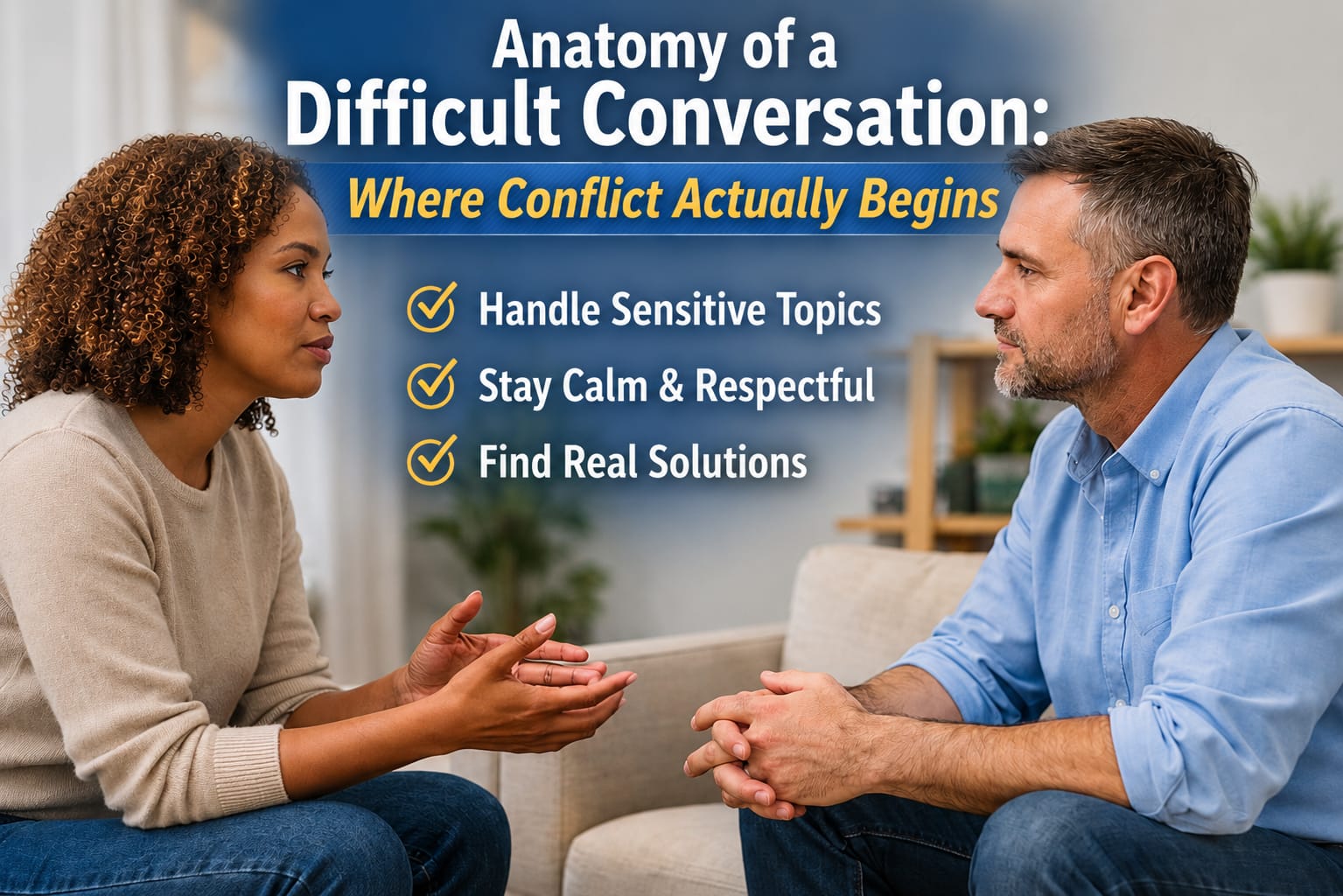
A close friend cancels dinner for the third time.
You feel hurt.
What happens next may say more about emotional health than whether you felt hurt in the first place.
One person tells herself she should not be upset and pushes the feeling away. Another spends the evening replaying the cancellation, becoming increasingly convinced the friendship is ending. A third immediately sends an angry message. A fourth recognizes the disappointment, waits until the emotional intensity settles, and later asks the friend whether something is wrong.
Same event. Same initial emotion.
Four very different responses.
That distinction matters because emotional health is often described as though the goal were to become calmer, happier, and less affected by difficult experiences. But sadness after loss, anger after unfair treatment, fear in the face of danger, and disappointment after rejection are not evidence of emotional dysfunction.
The more useful question is:
What happens after the emotion arrives?
Watch: Emotional Health: 12 Habits That Can Improve Your Mental Balance
This video explores evidence-informed techniques that may help reduce stress and calm the body and mind. It complements the article’s deeper analysis of why stress-management strategies are not interchangeable—and why the most useful response depends on whether the problem is physiological activation, cognitive overload, a solvable stressor, or a situation that requires longer-term recovery and support.
IN THIS ARTICLE
Stress Is a Response. The Stressor Is the Problem Behind It.
Stress and stressors are related, but they are not identical.
The American Psychological Association describes stress as a physiological or psychological response to internal or external stressors. The World Health Organization describes stress as a natural human response to difficult situations and emphasizes that people respond differently.
That distinction has practical consequences.
An overdue medical bill is a stressor.
The racing thoughts, tense muscles, irritability and difficulty sleeping that follow are parts of the stress response.
Reducing that response can be valuable.
If your body becomes less activated, you may be able to think more clearly, sleep better or make a decision without feeling overwhelmed.
But reducing the response does not necessarily remove the stressor.
A breathing exercise may change what is happening inside your body.
It does not change the amount printed on the bill.
Understanding which of those problems you are trying to solve is the first step toward choosing a useful stress-management strategy.
When Your Body Is Sounding the Alarm
Sometimes the immediate problem is physiological activation.
Your heart feels faster. Your jaw is tight. Your shoulders are raised. Your breathing changes. You cannot settle enough to think clearly.
In that state, immediately trying to solve a complicated problem may be difficult.
The first useful step may be reducing the intensity of the body’s alarm response.
Slow breathing, brief movement, progressive muscle relaxation or grounding may help some people shift out of a highly activated state.
The goal is not to pretend that the problem has disappeared.
It is to create enough physiological space to deal with it.
Consider someone waiting for an important medical result.
Ten minutes of slower breathing will not change the laboratory report.
But it may reduce the immediate physical escalation that makes the waiting period harder to tolerate.
The intervention matches the body’s response—not the medical uncertainty itself.
When the Problem Is Cognitive Overload
Other forms of stress feel less like an alarm and more like having 17 browser tabs open inside your head.
You need to schedule an appointment, answer three messages, pay a bill, finish something for work, remember a birthday, arrange a prescription refill and decide what to make for dinner.
None of those tasks alone is catastrophic.
Together, they consume attention.
In this situation, another relaxation exercise may temporarily make you feel better, but a more direct intervention may be reducing cognitive load.
Write unfinished tasks down.
Separate what actually requires action today from what can wait.
Decide what can be delegated, canceled, automated or ignored.
This may sound too ordinary to qualify as stress management.
That is precisely why it can be useful.
Sometimes stress is not asking for deeper breathing. It is asking for fewer unresolved demands competing for your attention.
When There Is a Real Problem to Solve
Now return to the medical bill.
Suppose you meditate and feel significantly better for 20 minutes.
Then you open the envelope again and the stress returns.
Meditation did not fail.
It successfully changed your state without changing the situation.
The next intervention belongs to a different category:
action.
You might review the bill, contact the provider, verify insurance coverage, arrange a payment plan or incorporate the expense into your financial plan.
The same principle applies elsewhere.
If workload is impossible, a better evening routine cannot make an impossible workload reasonable.
If a relationship conflict remains unresolved, journaling may clarify your thoughts, but eventually a conversation may be necessary.
If you have postponed an important medical evaluation, relaxation may reduce worry temporarily, but scheduling the appointment addresses something different.
This is where stress advice can unintentionally become dismissive.
It can teach people how to tolerate a problem that may actually need to be changed.
“I manage stress in different ways because I have learned that I do not always need the same thing. Movement, prayer and nature are especially important to me. Walking and strength training help settle my body, while my daily rosary gives me a different kind of quiet and perspective.
On weekends, being at my sítio with my family—surrounded by trees, silence and abundant nature—gives me a sense of recovery that is difficult to reproduce in the middle of a busy routine. None of these things makes every real-life problem disappear, but they can change the state in which I face those problems.
That is what I recognize in this article. Stress is not one single problem, so I do not expect one technique to solve everything. Sometimes my body needs to settle. Sometimes my mind needs space. Sometimes I need recovery. And sometimes the situation itself needs action. Knowing the difference gives me more clarity about what I actually need.”
— Silvia Fernandes, Curator of LongevityHabitos Portal
When the Stressor Cannot Be Quickly Fixed
Not every problem has a solution available this week.
Caring for a spouse with a chronic illness, grieving someone you love, living with financial uncertainty, helping an aging parent or adjusting to your own health changes can create stress that cannot simply be crossed off a list.
In these situations, “solve the stressor” may be unrealistic.
The task changes from elimination to load management and recovery.
What responsibilities can be shared?
Where can practical help come from?
Are there periods when you are genuinely off duty?
Is sleep being repeatedly sacrificed?
Have you become socially isolated?
Is the situation beginning to affect your ability to function?
Support is not merely emotional comfort.
In chronic stress, practical support can change how much burden one person is carrying.
This becomes particularly relevant after 50, when several demanding roles may coexist: employment, financial planning, caregiving, health concerns, relationships and responsibility for older relatives.
Sometimes resilience is not becoming better at carrying everything.
It is stopping one person from having to carry everything alone.
Why Chronic Stress Is Different From a Bad Day
The human stress response is useful.
It helps mobilize attention and energy when something requires action.
The problem is not simply that the system activates.
The problem can emerge when activation becomes persistent and recovery becomes inadequate.
The American Psychological Association notes that chronic stress can affect multiple systems of the body and is associated with problems involving sleep, mood, cardiovascular health, digestion, muscle tension, memory and concentration.
Researchers sometimes use the concept of allostatic load to describe the cumulative physiological burden associated with repeated adaptation to stressors.
That does not mean every stressful week causes disease.
It means recovery matters.
A difficult event followed by recovery is different from months in which one demand ends only as another begins.
For adults in midlife and beyond, the question therefore becomes broader than:
“How stressed am I?”
Ask instead:
Am I still recovering between the things that stress me?
The Stress Match Test
Before choosing a stress-management technique, identify what you actually need from it.
My body is highly activated.
Start by helping the body settle enough to think and function.
My mind is overloaded.
Externalize, prioritize, simplify or remove demands.
There is a concrete problem I can influence.
Identify the smallest meaningful action that changes the situation itself.
The situation cannot be fixed quickly.
Protect recovery, seek practical and emotional support and reduce unnecessary load where possible.
These categories can overlap.
A caregiver may need breathing to settle acute tension, a written schedule to reduce cognitive overload, a family conversation to redistribute responsibilities and professional support for a situation that remains difficult.
The point is not to find one perfect technique.
It is to stop asking one technique to do four different jobs.
When Stress Management Is No Longer Enough
Self-management has limits.
The World Health Organization notes that persistent stress can affect daily functioning and may be associated with mental health conditions such as anxiety and depression.
Professional help becomes especially important when distress is persistent, overwhelming, significantly disrupts sleep or daily life, or when existing coping strategies are no longer enough.
Seeking help does not mean that someone failed to manage stress correctly.
Sometimes the most accurate assessment is simply that the burden has exceeded what self-help can reasonably address.
The Bottom Line
Breathing, exercise, mindfulness, sleep, social connection, time outdoors and relaxation can all have legitimate places in stress management.
But they are not interchangeable.
A breathing exercise can regulate your response to an unpaid bill.
It cannot pay it.
A walk can create mental space before a difficult conversation.
It cannot have the conversation for you.
Meditation may change how you relate to uncertainty.
It cannot make every uncertain situation disappear.
Better stress management begins with matching the intervention to the problem.
Before asking:
“What can I do to calm down?”
Try asking:
“What does this stress actually need from me?”
Sometimes the answer is recovery.
Sometimes it is organization.
Sometimes it is action.
And sometimes it is help.
This content is educational and does not replace individualized medical, psychological or psychiatric care.
FAQs
Why does stress sometimes return immediately after I relax?
Relaxation may reduce the physiological or emotional stress response without changing the situation that triggered it. If the underlying problem remains, the response can return when attention goes back to the stressor. That does not necessarily mean the relaxation technique failed; it may simply have performed a different job.
How do I know whether I need recovery or action?
Ask whether there is a concrete part of the situation you can meaningfully influence now. If there is, action may reduce the stressor itself. If the situation cannot be changed quickly, protecting recovery and reducing the amount of burden you carry may become more important.
Can organization actually be a form of stress management?
Yes. When stress comes partly from multiple unfinished demands competing for attention, externalizing tasks, prioritizing them and eliminating unnecessary obligations can reduce cognitive load. The intervention is organizational rather than primarily physiological.
Why can the same stress-management technique work one day and not another?
The underlying problem may be different. Slow breathing may be useful when the body is highly activated but less relevant when the main issue is an unresolved financial problem, excessive workload or cognitive overload. The effectiveness of a technique depends partly on whether it matches what is creating or maintaining the stress.
Can taking a break become avoidance?
It can. Recovery is useful when it restores the capacity to function, but repeatedly using relaxation or distraction to postpone a problem that requires action may leave the underlying stressor unchanged. The distinction often becomes clearer by asking what still needs to happen after the break.
What if the main source of stress is something I cannot control?
When a stressor cannot be removed, the goal may shift toward reducing unnecessary demands, sharing responsibilities, protecting sleep and recovery, maintaining social support and seeking professional or practical assistance when needed. Not every stressor can be solved, but the burden surrounding it may sometimes be modified.
Related Articles from Longevity Hábitos
Stress: Why Calming Down Is Sometimes the Wrong Goal
https://longevityhabitos.com/stress/
Conscious Breathing: What Happens Inside Your Body When You Slow Your Breath?
https://longevityhabitos.com/conscious-breathing/
Work-Life Balance: What If Your Habits Aren’t the Problem?
https://longevityhabitos.com/work-life-balance/
Scientific & Institutional References em HTML
Scientific & Institutional References
Relation Between Emotion Regulation and Mental Health: A Meta-Analysis Review https://pubmed.ncbi.nlm.nih.gov/24897894/
Emotion Regulation: Affective, Cognitive, and Social Consequences https://pubmed.ncbi.nlm.nih.gov/12212647/
Effects of Self-Compassion Interventions on Reducing Depressive Symptoms, Anxiety, and Stress: A Meta-Analysis https://pubmed.ncbi.nlm.nih.gov/37362192/
Written by: Daniela Restelatto — Health & Longevity Content Writer
Reviewed by: Silvia Fernandes — Scientific Content Curator, Longevity & Healthy Aging
AI-assisted production, manually reviewed and edited.
Editorial note: Emotional regulation is context-dependent. This article does not classify individual emotions as healthy or unhealthy and does not assume that aging automatically improves emotional regulation.
Important notice: This content is educational and does not replace individualized psychological, psychiatric, or medical care.
Last updated: September 2026
- Newsletter International
Longevity Club
Receive exclusive science-based insights on longevity, health, habits, and well-being — delivered weekly for free.
- Exclusive PDF guides
- Evidence-based content
- 100% Free
- Community Brazil
Longevity Hábitos Community
A supportive WhatsApp community for Brazilians focused on health, balance, longevity, and daily motivation.
- Exclusive community
- Daily motivation
- Practical habits
- 100% free
Continue Learning
Explore more content on health, well-being, and longevity.