- By Daniela Restelatto
- 8 min read
- #EmotionalIntelligence #HealthyRelationships #EmotionalHealth
Emotional Intelligence: Why Being Good With Emotions Can Still Make Relationships Worse
Emotional intelligence sounds like an unquestionable advantage.
Recognize your feelings. Read other people accurately. Control impulsive reactions. Show empathy. Communicate thoughtfully.
Those abilities should produce better relationships.
Often, they do.
But there is a complication rarely mentioned in popular discussions of emotional intelligence: understanding emotions is a skill. What someone does with that understanding is a separate question.
A person can recognize another person’s vulnerability and respond with compassion—or exploit it. Someone can regulate anger constructively—or become so controlled that important problems are never discussed. Empathy can deepen intimacy, but without boundaries it can also become exhausting.
The paradox is that emotional skill alone does not determine whether a relationship becomes healthier.
Watch: Emotional Intelligence: 10 Skills That Transform Relationships and Mental Well-Being
This video explores emotional-intelligence skills related to self-awareness, emotional regulation, empathy, communication, and relationships. It complements this article’s examination of why emotional abilities can support healthier relationships—or create problems when they are used without boundaries, humility, accountability, or ethical intention.
IN THIS ARTICLE
Emotional Intelligence Is an Ability, Not a Moral Quality
The term emotional intelligence covers several related capacities, including recognizing, understanding and managing emotions.
Research generally associates higher emotional intelligence with favorable psychological and interpersonal outcomes. But treating it as synonymous with kindness creates a conceptual problem.
Knowing what another person feels does not determine what you will do with that information.
Consider two people who immediately recognize that their partner is insecure about getting older.
One responds carefully because they understand the subject is painful.
The other uses the same knowledge during an argument: “You’re only saying that because you’re afraid of getting old.”
Both detected the emotion.
Only one used that information constructively.
Research examining the “dark side” of emotional intelligence has found that emotional skills can sometimes operate alongside manipulative tendencies. A review of the literature concluded that emotional intelligence is not universally beneficial and that its effects partly depend on other characteristics and how emotional knowledge is used.
That changes the central question from:
“How emotionally intelligent are you?”
to:
“What happens after you understand the emotion?”
Empathy Can Connect You—and Still Need a Boundary
Empathy is one of the most celebrated interpersonal abilities.
It allows us to recognize another person’s experience without requiring that experience to be our own.
But empathy does not mean unlimited accommodation.
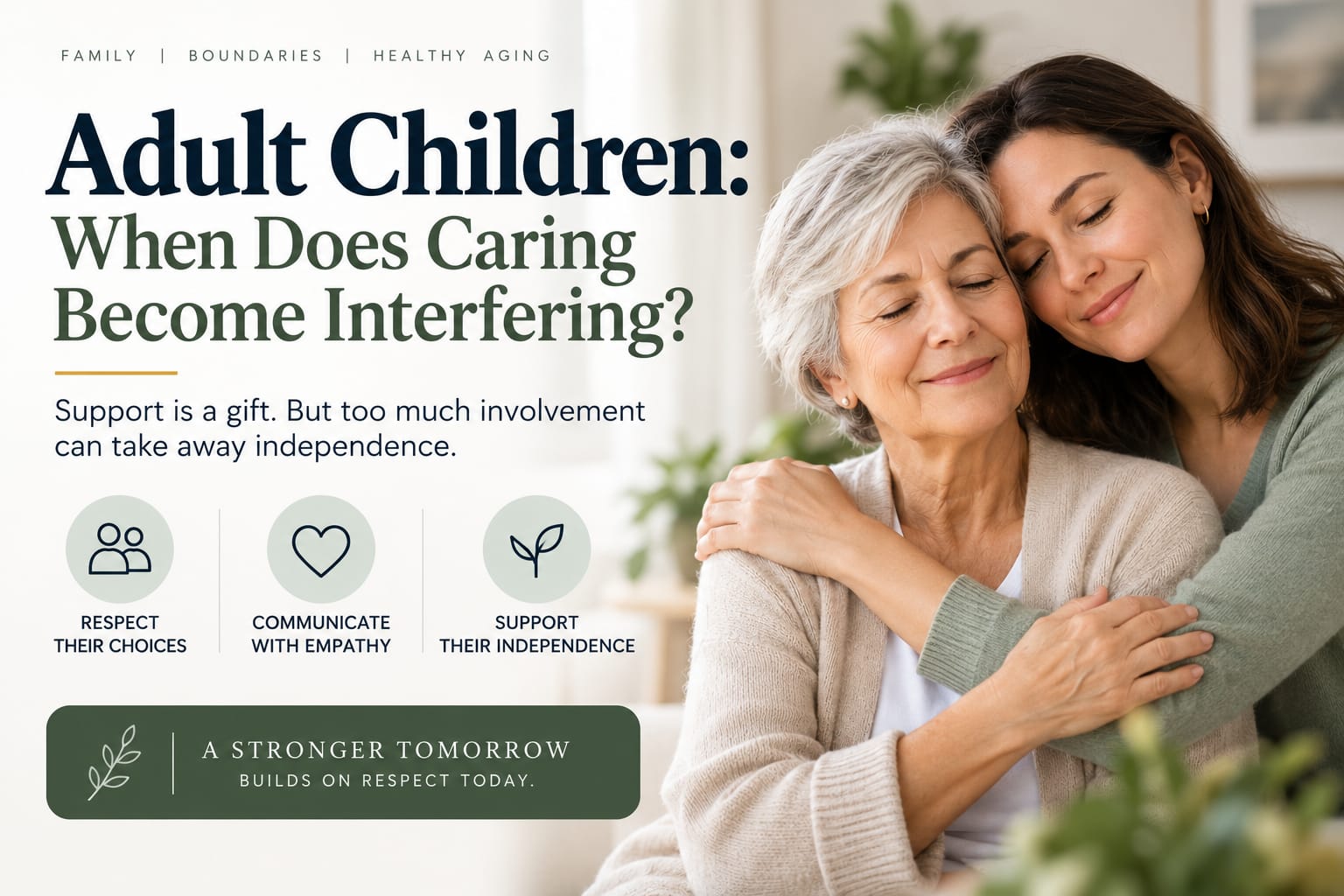
Imagine a woman caring for an aging parent while also managing her own household and work. She understands why her parent is frightened, frustrated and increasingly dependent.
That understanding matters.
But if empathy becomes “I must personally solve every distress because I understand why it exists,” emotional sensitivity can turn into chronic overextension.
A boundary does not cancel empathy.
It defines what you can realistically do with it.
The healthier sequence may be:
I understand why you need me → your need is legitimate → I still cannot meet every part of it myself.
That distinction becomes increasingly important in relationships shaped by caregiving, illness, retirement, bereavement or changing family roles.
Emotional intelligence is not absorbing everyone else’s emotions. Sometimes it means understanding another person’s distress without making yourself entirely responsible for removing it.
When Self-Regulation Becomes Self-Silencing
“Don’t react emotionally” sounds like mature advice.
But emotional regulation and emotional suppression are not the same thing.
Imagine a couple who have been married for three decades.
One partner repeatedly makes financial decisions without discussing them. The other becomes angry but prides herself on remaining calm. She avoids raising the issue because she does not want conflict.
There is no shouting.
There is also no resolution.
This is where the language of emotional intelligence can become misleading. A relationship that looks calm from the outside may contain resentment, avoidance or unspoken disagreement.
Regulation means being able to experience an emotion without allowing it to dictate your behavior automatically.
It does not require pretending the emotion is irrelevant.
Sometimes the emotionally intelligent response to anger is not becoming quieter.
It is saying clearly:
“This keeps happening, and we need to talk about it.”
Calm can support a difficult conversation.
It should not become a substitute for having one.
Reading Someone Well Can Also Become Manipulation
Here is the uncomfortable edge of emotional intelligence.
The better you understand what motivates someone, what embarrasses them and what makes them feel secure, the more information you possess about how to influence them.
That influence can be prosocial.
A spouse recognizes that criticism makes their partner defensive and chooses a gentler opening to make a difficult conversation possible.
But the same perceptiveness can be used strategically.
Research involving hundreds of employees found associations between emotional intelligence and some forms of disingenuous emotional manipulation, while other research suggests that emotion-recognition ability can interact with darker personality traits in predicting manipulative behavior.
This does not mean emotionally intelligent people are generally manipulative.
It means emotional perception should not be confused with ethical intention.
The skill is neutral enough to be used in different directions.
A useful test is therefore not simply whether someone understands your emotions.
Ask what happens to that information.
Does understanding increase your autonomy—or give the other person greater control over you?
Empathy Is Not Agreement
Another common mistake is treating empathy as the obligation to validate someone’s interpretation of events.
Suppose a friend says:
“My daughter doesn’t care about me anymore. She only calls twice a week.”
An empathic response can acknowledge the loneliness:
“It sounds like you’re missing the closeness you used to have.”
That does not require agreeing that the daughter is uncaring.
This distinction matters because healthy relationships require the ability to hold two realities simultaneously.
Your emotion can be real even when your interpretation is incomplete.
Emotional intelligence becomes less useful when empathy turns into automatic agreement.
Sometimes the most respectful response combines emotional recognition with a different perspective.
Being Right About an Emotion Does Not Make You Right About Its Cause
Humans infer emotions from tone, expression, behavior and context.
Those signals can be useful.
They can also be misread.
A quiet partner may be angry.
Or tired.
Or worried about a medical appointment.
Or simply thinking.
Emotional intelligence should therefore include uncertainty.
Compare:
“You’re angry with me.”
with:
“You seem quieter than usual. Is something bothering you?”
The first presents an interpretation as fact.
The second tests the interpretation.
This matters especially in long relationships, where familiarity can create the illusion that we already know what another person thinks.
Knowing someone for 25 years does not make mind-reading more accurate.
Sometimes it simply makes our assumptions older.
A Calm Conflict Can Still Be an Unhealthy Conflict
Emotional intelligence is often judged by the visible temperature of an interaction.
No shouting. No insults. No obvious loss of control.
But low emotional intensity does not automatically mean healthy communication.
A person can dismiss, stonewall, manipulate or avoid while speaking quietly.
Conversely, two people can become visibly upset while still listening, repairing misunderstandings and eventually reaching a constructive outcome.
The better measure is not:
“Did everyone stay calm?”
It is:
“What did the conversation accomplish?”
Did both people understand the issue more accurately?
Could each person disagree safely?
Was responsibility acknowledged?
Did anything change afterward?
Emotional regulation should improve the ability to engage with a problem—not simply make conflict look more civilized.
The Relationship Test Emotional Intelligence Actually Has to Pass
Rather than scoring emotional intelligence by how perceptive, calm or empathic someone appears, examine what those abilities produce over time.
Can you recognize your feelings without making another person responsible for them?
Can you understand someone’s distress without surrendering every boundary?
Can you regulate anger without burying the problem that caused it?
Can you recognize another person’s vulnerability without using it as leverage?
Can you revise your interpretation when you have misunderstood someone’s emotion?
And can you tolerate disagreement without treating disagreement as rejection?
These questions move emotional intelligence out of personality-test territory and into actual relationships.
They also reveal why one isolated skill is insufficient.
Empathy needs boundaries.
Self-awareness needs accountability.
Regulation needs expression.
Emotional perception needs humility.
And influence needs ethics.
Emotional Intelligence Is Most Valuable When It Has Somewhere Healthy to Go
Emotional intelligence deserves its positive reputation—but not an unlimited one.
Research supports meaningful associations between emotional abilities and psychological and interpersonal functioning. At the same time, the scientific literature recognizes that emotional skills can produce different outcomes depending on personality, motives, context and how those skills are deployed.
That is the paradox.
The ability to understand emotion gives you information.
The ability to regulate emotion gives you options.
Neither decides what you will do next.
A healthier relationship requires something beyond emotional skill: respect, boundaries, honesty, accountability and willingness to tolerate difficult truths.
Perhaps the best evidence of emotional intelligence is not that someone always knows what everyone is feeling.
It is what they choose to do once they know.
“Emotional intelligence is an ability, not a guarantee of healthy relationships. It helps you read emotions, regulate reactions and understand others — but those skills can support connection or enable manipulation, depending on how they’re used. Empathy needs boundaries, regulation needs expression, and perception needs humility. The real measure of emotional intelligence isn’t how accurately someone identifies feelings — it’s what they choose to do with that information.” Silvia Fernandes – Curator of LongevityHabitos Portal
FAQs
Can high emotional intelligence be harmful?
Emotional intelligence is generally associated with positive outcomes, but research suggests emotional skills can also be used strategically or manipulatively depending on other traits and motives.
Is empathy always good for relationships?
Empathy can strengthen connection, but it does not require unlimited availability, agreement or responsibility for another person’s emotions.
Is staying calm a sign of emotional intelligence?
Sometimes. Regulation can prevent impulsive escalation, but avoiding necessary conversations is not the same as regulating emotion.
Can emotionally intelligent people manipulate others?
Yes. Accurately reading emotions can potentially be used for either supportive or self-serving purposes. Emotional ability does not guarantee ethical behavior.
What matters beyond emotional intelligence?
Healthy relationships also depend on boundaries, trust, accountability, communication, respect and how emotional knowledge is used.
Related Articles from Longevity Hábitos
Effective Communication: Why the Same Conversation Can End in Conflict—or Connection
https://longevityhabitos.com/relationships/communication/
True Friendship: Why Some Relationships Protect Your Health—and Others Drain It
https://longevityhabitos.com/true-friendship/
Family and Mental Health: When Does Family Support Help—and When Does It Add Stress?
https://longevityhabitos.com/family-and-mental-health/
Scientific & Institutional References
Frontiers in Psychology — Does Emotional Intelligence Have a “Dark” Side? A Review of the Literature
https://www.frontiersin.org/journals/psychology/articles/10.3389/fpsyg.2016.01316/pdf
Australian Journal of Psychology — The Dark Side of Emotional Intelligence: Emotional Manipulation at Work
https://www.tandfonline.com/doi/pdf/10.1111/ajpy.12294
Frontiers in Psychology — The Dark Side of Emotion Recognition: Evidence From Cross-Cultural Research
https://www.frontiersin.org/journals/psychology/articles/10.3389/fpsyg.2020.01132/pdf
Written by: Daniela Restelatto — Health & Longevity Content Writer
Reviewed by: Silvia Fernandes — Scientific Content Curator, Longevity & Healthy Aging
AI-assisted production, manually reviewed and edited.
Editorial note: Emotional intelligence is associated with many positive outcomes, but emotional perception and regulation should not be interpreted as guarantees of empathy, ethical behavior or relationship quality.
Important disclaimer: This content is educational and does not replace psychological or psychiatric care.
Last updated: September 2026
- Newsletter International
Longevity Club
Receive exclusive science-based insights on longevity, health, habits, and well-being — delivered weekly for free.
- Exclusive PDF guides
- Evidence-based content
- 100% Free
- Community Brazil
Longevity Hábitos Community
A supportive WhatsApp community for Brazilians focused on health, balance, longevity, and daily motivation.
- Exclusive community
- Daily motivation
- Practical habits
- 100% free
Continue Learning
Explore more content on health, well-being, and longevity.