- By Daniela Restelatto
- 9 min read
- #MeaningInLife #Purpose #WellBeing
Can a Meaningful Life Be Unhappy? The Paradox of Purpose and Well-Being
A woman spends years caring for a husband with a progressive illness. She is tired, worried and sometimes frustrated. If asked whether those years made her happy, she might hesitate.
Ask whether they mattered, and the answer may be immediate.
A grandfather rearranges his week to help care for his grandchildren. A volunteer keeps showing up at a food pantry even when the work is exhausting. Someone spends months learning a difficult skill because becoming competent matters deeply to them.
None of these experiences guarantees happiness in the moment.
Yet each can feel meaningful.
That distinction exposes a problem with the way purpose is often discussed. Popular wellness advice tends to place happiness, fulfillment and meaning in the same package, as though a meaningful life should also be a consistently pleasant one.
Psychological research suggests something more complicated.
A life can contain discomfort, responsibility and loss—and still feel worth living.
That is the paradox of meaning.
Watch: Meaning in Life: 10 Scientific Discoveries About Happiness and Purpose
This video explores scientific findings about meaning, happiness, purpose, and well-being, including why a meaningful life is not necessarily a consistently pleasant one. It complements this article’s deeper examination of purpose, coherence, significance, difficult emotions, and the complex relationship between meaning and health.
IN THIS ARTICLE
The Problem With “A Meaningful Life Should Feel Good”
Imagine two Saturdays.
On the first, you sleep late, eat your favorite meal and spend the afternoon watching a show you enjoy.
Pleasant? Probably.
Meaningful? Maybe. Maybe not.
On the second, you wake early to help your daughter move, spend hours carrying boxes and drive home exhausted.
Pleasant? Perhaps not.
Meaningful? Quite possibly.
This does not make pleasure superficial or sacrifice inherently virtuous. It demonstrates that different experiences can satisfy different psychological needs.
Research comparing happiness and meaningfulness has found considerable overlap between them—but also differences. Happiness tends to be more closely connected with having needs and wants satisfied and with positive experiences in the present. Meaningfulness appears to reach more strongly across time, connecting what has happened, what matters now and what a person believes their life is moving toward.
So asking, “Did this make me happy?” and asking, “Did this matter to me?” are not necessarily the same question.
Pleasure, Life Satisfaction and Meaning Are Different Questions
The vocabulary of well-being can become confusing because several concepts are often treated as synonyms.
Pleasure asks: Does this experience feel good?
Life satisfaction asks: When I evaluate my life overall, am I satisfied with it?
Meaning asks something different: Does my life make sense, have direction and feel significant?
Psychologists Frank Martela and Michael Steger have argued that meaning in life can be understood through three distinguishable dimensions: coherence, purpose and significance.
Coherence is the sense that your life and experiences make sense.
Purpose concerns goals, direction and what you are moving toward.
Significance concerns whether your life feels inherently valuable and worth living.
The distinction matters because those dimensions can shift independently.
Someone may know exactly where they are going professionally but feel that the work no longer matters. Another person may feel deeply valued by family yet be uncertain about what they want from the next decade.
Meaning is therefore not simply another word for happiness.
It is an architecture built from several psychological questions.
Purpose: Where Is My Life Going?
Purpose is usually the easiest component to recognize because it points forward.
Raising a child, building a business, caring for someone, mastering a craft, contributing to a community or completing a degree can organize behavior around a direction.
But purpose does not have to be monumental.
One problem with the modern language of purpose is that it can make ordinary lives sound insufficient. We hear about finding “the one thing you were meant to do,” as though everyone requires a mission statement.
Research does not require that interpretation.
Purpose can exist in modest but durable directions: being available to family, maintaining independence, creating something useful, mentoring younger people, learning, caring for a garden or contributing to a neighborhood.
What matters psychologically is not whether the purpose looks impressive from the outside.
It is whether it gives behavior direction from the inside.
Coherence: Does My Life Still Make Sense?
Purpose asks where life is going.
Coherence asks whether the story makes sense.
That distinction becomes particularly visible during transitions.
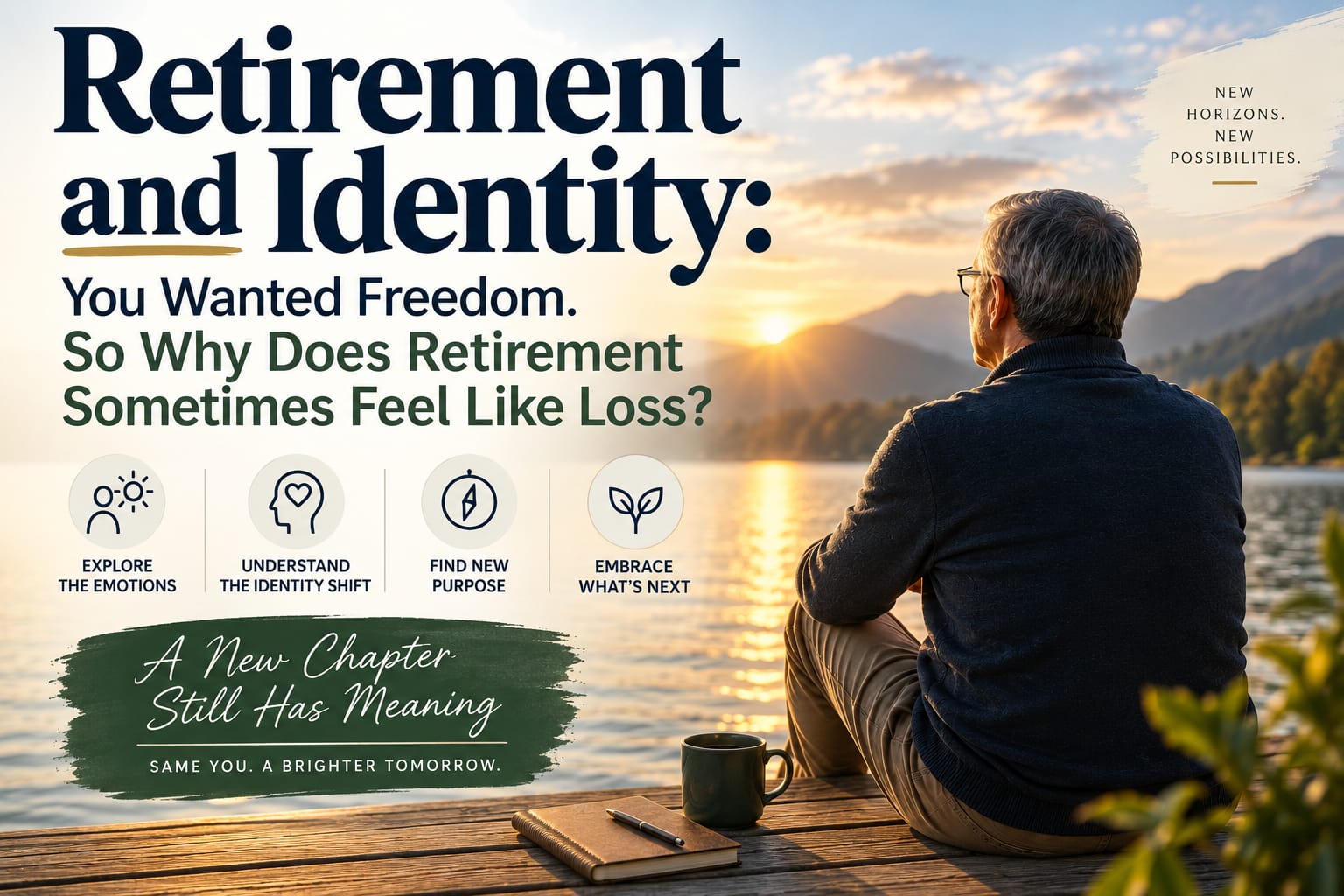
Retirement can remove a professional identity held for 30 years. Children leave home. A marriage ends. Health changes what someone can do. A caregiving role that dominated daily life can suddenly disappear.
Nothing about these transitions automatically destroys meaning.
But they can disrupt the story a person has been using to understand themselves.
“I was the person everyone called at work.”
“I was raising my children.”
“We did everything together.”
“And now?”
This is why meaning is not merely about acquiring another goal. Sometimes the challenge is integrating a changed life into a coherent identity.
The question is not only What will I do next?
It may also be:
Who am I now that this chapter has ended?
Significance: Does My Life Matter Beyond My To-Do List?
A person can have a full calendar and still feel strangely unnecessary.
That is where significance—or what researchers sometimes discuss in relation to mattering—becomes important.
Being busy is not the same as feeling that your existence matters.
A job can provide deadlines without significance. A social calendar can provide activity without intimacy. A retirement plan can provide financial structure without answering who or what makes life feel consequential.
For many people, significance emerges through relationships and contribution: being loved, needed, remembered, trusted or able to affect another person’s life.
But this also reveals why meaning can hurt.
If someone matters deeply to you, their suffering matters too.
If caregiving feels meaningful, it can also be exhausting.
If your work matters, failure can sting more.
Meaning increases the stakes.
A meaningful life is not protected from difficult emotion. Sometimes meaning is precisely why an experience carries so much emotion.
Why Meaningful Experiences Can Make Us Unhappy
This is the central paradox.
We often assume that if something is good for our well-being, it should feel good while we are doing it.
But many valuable human experiences contain costs.
Parenting can bring love and worry.
A long marriage can bring intimacy and conflict.
Volunteering can bring contribution and fatigue.
Learning can bring growth and frustration.
Caring for aging parents can bring connection, grief and responsibility at the same time.
These emotions do not cancel one another.
The mistake is treating happiness as the only test of whether an experience is psychologically valuable.
Meaning may sometimes require tolerating discomfort because the discomfort occurs in service of something the person considers important.
That is very different from claiming that suffering itself creates meaning.
Pain is not automatically meaningful. Hardship does not need to be romanticized. Chronic stress, abusive relationships and overwhelming caregiving demands can damage health and require support.
The distinction is crucial:
Something can be meaningful despite being difficult. Difficulty does not make something meaningful by itself.
The Retirement Paradox: When Success Removes a Source of Meaning
Retirement illustrates the problem unusually well.
For decades, work may provide more than income. It can supply structure, identity, social contact, competence and a reason to be needed at a particular time each morning.
Then retirement arrives—the outcome someone may have spent years saving for.
Financially, it can represent success.
Psychologically, it can remove several sources of meaning at once.
Research using the U.S. Health and Retirement Study has found that greater engagement in leisure activities is associated with higher purpose in later adulthood, and more active participants showed less decline in purpose over time. Other research suggests that many older adults consider maintaining purpose during retirement important.
The implication is not that retirees need to stay constantly busy.
It is that removing work does not automatically replace what work was providing.
A retirement plan can answer:
Can I afford to stop working?
It may not answer:
What will make Tuesday matter when nobody needs me at the office anymore?
That is a different form of planning.
“Many times we live life on autopilot. We work in roles that pay well but don’t truly match our dreams — like sales, where the income is good but the purpose feels misaligned with who we are. The article reminded me of something powerful: a meaningful life isn’t always a happy one, but it’s one that makes sense. Today, so many people in their second half of life finally have the chance to choose a career that aligns with their values, talents, and dreams. Purpose doesn’t have to be grand; it just has to feel true. And when your work begins to match your inner story, even the difficult days feel like they belong to a life worth living.”
Silvia Fernandes – Curator of LongevityHabitos Portal
Does Purpose Make People Healthier?
Here the science becomes especially interesting—and easy to exaggerate.
A 2019 study published in JAMA Network Open followed 6,985 U.S. adults older than 50. Lower purpose in life was associated with higher all-cause mortality during follow-up.
Another prospective analysis of 13,770 adults in the Health and Retirement Study found that people reporting greater purpose were less likely over time to become physically inactive, develop sleep problems or move into an unhealthy BMI category.
These findings are important.
But they do not prove that purpose itself directly extends life.
People with stronger purpose may differ in social connection, health behaviors, socioeconomic circumstances, baseline health, resilience or other characteristics. Researchers statistically adjust for many potential confounders, but observational studies cannot eliminate every alternative explanation.
The relationship may also run in more than one direction.
Purpose could encourage healthier behavior.
Better health could make it easier to pursue meaningful activities.
Social connection could strengthen purpose while independently influencing health.
So the scientifically defensible conclusion is:
Purpose is associated with several favorable health outcomes. Exactly how much purpose causes those outcomes remains a more difficult question.
Can Purpose Become Too Narrow?
There is another side of purpose that receives less attention.
Suppose nearly all of someone’s meaning comes from one role:
executive.
parent.
caregiver.
athlete.
spouse.
What happens when that role changes?
A powerful purpose can organize life. An excessively narrow identity can also make transitions destabilizing.
Retirement ends the executive role. Children become independent. Caregiving ends. Injury changes athletic ability. Bereavement ends a partnership.
The problem was not having purpose.
The vulnerability came from having too few places from which meaning could be drawn.
This suggests that a resilient meaningful life may resemble a diversified portfolio more than a single investment.
Relationships can matter.
Contribution can matter.
Learning can matter.
Spirituality, creativity, community, work and care can matter.
Not every source needs equal weight, and nobody needs to manufacture activities simply to fill categories.
But when one role carries the entire burden of answering “Why do I matter?”, losing that role can shake much more than a schedule.
Maybe Happiness Is the Wrong Test
None of this argues against happiness.
Pleasure matters. Enjoyment matters. Rest matters. A meaningful life does not need to be an endless exercise in sacrifice.
The point is narrower.
Happiness cannot answer every question we ask about a good life.
Some days are valuable because they are joyful.
Others are valuable because we kept a promise, helped someone, learned something difficult, cared for someone we love or acted according to a value even when doing so was inconvenient.
A meaningful life can contain both.
Perhaps that is why purpose remains psychologically important even when life stops feeling easy.
The question is not whether every day makes us happy.
It is whether the difficult days still belong to a life we recognize as ours—and whether enough of what we do remains connected to something worth caring about.
FAQs
Are happiness and meaning the same thing?
No. They overlap, but research distinguishes them. Happiness is more closely related to positive affect and satisfaction, while meaning involves purpose, coherence and a sense that life has value.
Can someone have a meaningful life and still feel unhappy?
Yes. Meaningful experiences can involve stress, grief, responsibility or effort. Persistent unhappiness or symptoms of depression, however, should not simply be dismissed as the “price of purpose.”
Does having purpose make you live longer?
Higher purpose has been associated with lower mortality in observational studies, but this does not prove that purpose directly causes longer life.
Can purpose change during retirement?
Yes. Retirement can alter roles, routines and identity. Research suggests that continued engagement in meaningful activities may help some people maintain a sense of purpose.
Does purpose need to involve helping other people?
No. Contribution and relationships can be important sources of meaning, but purpose may also come from learning, creativity, spirituality, personal projects or other valued directions.
Related Articles from Longevity Hábitos
How to Find Your Purpose: Why Meaning Is Built, Not Discovered
https://longevityhabitos.com/how-to-find-your-purpose/
Purpose in Life: Can Having a Reason to Get Up in the Morning Actually Affect Your Health?
https://longevityhabitos.com/purpose-in-life/
Meaning of Life: 10 Insights from Psychology and Philosophy to Find Direction
https://longevityhabitos.com/meaning-of-life-insights-find-direction/
Scientific & Institutional References
The Journal of Positive Psychology — Martela & Steger, “The Three Meanings of Meaning in Life: Distinguishing Coherence, Purpose, and Significance”
https://doi.org/10.1080/17439760.2015.1137623
The Journal of Positive Psychology — Baumeister et al., “Some Key Differences Between a Happy Life and a Meaningful Life”
https://doi.org/10.1080/17439760.2013.830764
JAMA Network Open — “Association Between Life Purpose and Mortality Among US Adults Older Than 50 Years”
https://jamanetwork.com/journals/jamanetworkopen/fullarticle/2734064
National Library of Medicine / PubMed — “Sense of Purpose in Life and Five Health Behaviors in Older Adults”
https://pubmed.ncbi.nlm.nih.gov/32593729/
National Library of Medicine / PubMed — “Purpose in Life in Older Adults: A Systematic Review on Conceptualization, Measures, and Determinants”
https://pubmed.ncbi.nlm.nih.gov/35627396/
Written by: Daniela Restelatto — Health & Longevity Content Writer
Reviewed by: Silvia Fernandes — Scientific Content Curator, Longevity & Healthy Aging
AI-assisted production, manually reviewed and edited.
Editorial note: This article distinguishes happiness, life satisfaction and meaning rather than treating them as interchangeable concepts. Associations between purpose and health outcomes are discussed as observational evidence and should not be interpreted as proof that purpose directly prevents disease or extends an individual’s lifespan.
Important disclaimer: This content is for educational purposes only and does not replace medical, psychological or psychiatric advice.
Last updated: September 2026
- Newsletter International
Longevity Club
Receive exclusive science-based insights on longevity, health, habits, and well-being — delivered weekly for free.
- Exclusive PDF guides
- Evidence-based content
- 100% Free
- Community Brazil
Longevity Hábitos Community
A supportive WhatsApp community for Brazilians focused on health, balance, longevity, and daily motivation.
- Exclusive community
- Daily motivation
- Practical habits
- 100% free
Continue Learning
Explore more content on health, well-being, and longevity.